Where the West Still Rides
By Evie Carrick
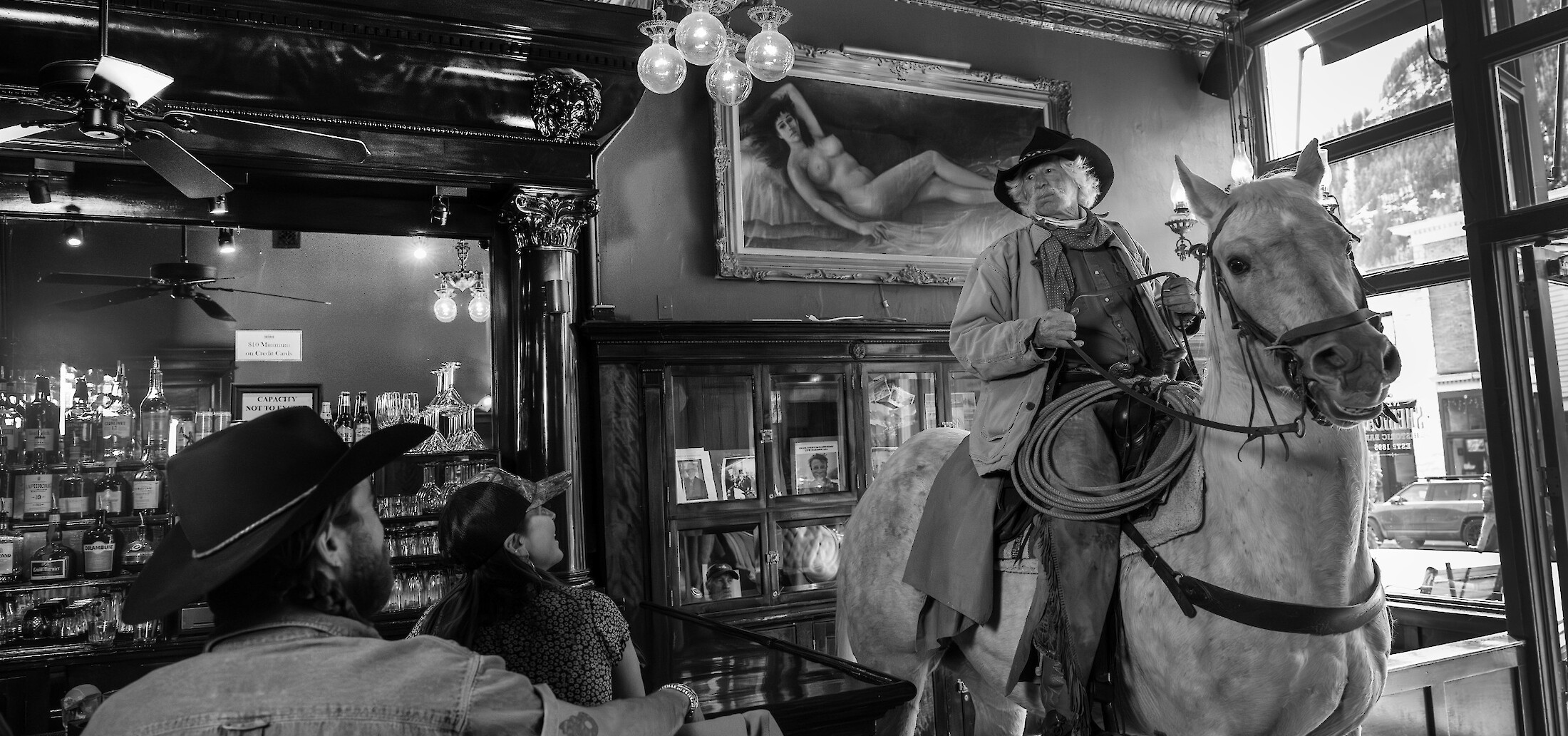
A favorite Telluride tale centers on a local cowboy named Roudy, who would ride his horse straight into the New Sheridan Bar on main street and order a drink without ever dismounting. It’s the kind of story that sounds like local legend, but happens to be entirely true.
Roudy’s story is one of many that remains embedded in local culture. But long before a cowboy and his horse saddled up to the bar, the area was inhabited by the Uncompahgre Utes, who traveled to the Telluride area in the summer to hunt. The Utes’ millenia-long annual migration to the region was first disrupted by the arrival of miners and early ranch families, and ultimately ended in 1881, when they were forcibly relocated by the U.S. Army.
The miners were the next to go — albeit by choice — when the mining boom faded. The ranchers, who supplied the miners with meat, wool, and hay were also affected. Gorrono and Adams Ranch were sold and eventually developed into present-day Mountain Village and Telluride Ski Resort. (Today, an 1800s cabin from the historic Gorrono Ranch remains at the on-mountain restaurant that bears its name.)
However, some local ranches endured, adapting to preserve both their land and their livelihoods. Today, these ranching families play a vital role in open space conservation and thoughtful development. With roots stretching back generations, they carry a living legacy of local history. These are their stories.
Schmid Family Ranch, est. 1882
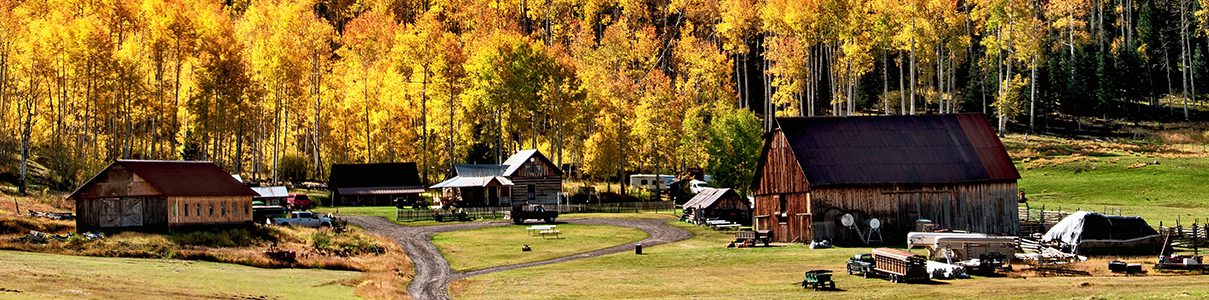
The oldest remaining family-owned ranch in the county is Schmid Family Ranch, formerly the Wells-Champlin Ranch. The 900-acre property west of Telluride on Wilson Mesa was homesteaded by James Wells in 1882. Today, over 140 years later, it is home to Wells’ great-great-great-great-granddaughter, Kayla Brack, and her family, who are the seventh and eighth generations to live on the ranch. The property is owned by Brack’s grandfather and great uncle, brothers Marvin and Sydney Schmid.
Brack spent a lot of time on the ranch as a kid “picking wild berries and making jellies and pies, or just eating them fresh” along with “learning how to fix things that broke and not just running straight to town to replace it.” Telluride may be less than 30 minutes from the ranch by car today, but back in the 1950s, when Marvin and Sydney and their siblings were coming of age, getting to town was an all-day adventure.
As Marvin tells it: “Trips to Telluride required the use of horses and sleds in the winter months to get to our pickup which was parked down on Bear Creek [Big Bear Creek] at a much lower elevation. … When we reached the parked pickup, the horses were tied to the back of the sled which had hay for them to eat while we drove into town. The kids had to ride in the back of that pickup covered in blankets and the family dog was balanced on the running board.”
Stories like that, along with those that happened much, much earlier, will continue to live on in family lore. The entire Schmid Family Ranch was put through a conservation easement in 2005 that will forever protect it from development.
Today, the property still functions as a working ranch, with 25 head of sheep, 80 mother cows, horses, and a full hay operation. The family also makes their own lumber from trees harvested and milled on the ranch. Telluride Wranglers operates out the Schmid Family Ranch, offering wagon and trail rides all summer long, and part of the property serves as a venue for weddings and hunting parties.
“All of the properties around us have been split up and sold. That is why we decided on a conservation easement,” said Sydney, one of the owners. “It is our desire to share the land with others while maintaining a bit of privacy. We like to maintain the heritage of ranching and farming.”
Aldasoro Brothers Ranch, est. 1926
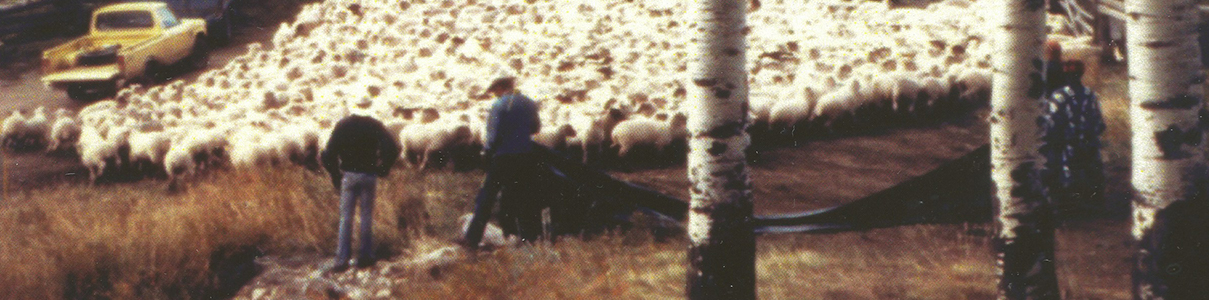
Head west of Telluride and look north and you’ll see Deep Creek Mesa, a broad tabletop above the highway with some of the area’s best views. These views have been a hallmark of home for five generations of Aldasoros, a family of heritage Basque sheepherders from Spain. Their story began in 1926, when Jose Joaquin Aldasoro, along with his brother and cousin, began purchasing land outside Telluride to graze sheep. Over time, Aldasoro Brothers Ranch blossomed into a 5,000-acre sheep operation that housed between 3,000 and 5,000 head of sheep at any given time.
When Joaquin passed away, the ranch was handed down to his heirs. His son, Albert Aldasoro, became managing partner of Aldasoro Brothers Ranch and raised his three daughters — Pam, Angie, and Cristine — on the property with his wife, Yula Mae.
“We had two crops: lamb and wool,” recalls Pam (Aldasoro) Bennett, one of the three daughters. Ranching was the family’s livelihood until she and her sisters reached young adulthood. By the early 1990s, however, the ranch was heavily mortgaged and facing serious financial hardship.
“I happened to be working for the developers of Mountain Village and realized that thoughtful development was what was going to save the ranch,” Bennett says. “I came home and said, ‘Daddy, we have to consider some kind of development or we are going to lose everything.’
To preserve at least part of their heritage, the family made the difficult decision to subdivide and sell portions of the land, including a parcel that now houses the Telluride airport. The family retained roughly 750 acres, now known as the “Old Sheep Ranch.” Today, all three sisters live on the property, where sheep and cattle still graze each spring, summer, and fall.
“The livestock come up in the spring after they’ve lambed or calved and stay all summer,” Bennett explains.
The fourth generation of Aldasoros, the children of Pam, Angie, and Cristine, are shaping the next chapter of the Aldasoro legacy. Several of them own and operate Telluride Sleighs & Wagons, which welcomes visitors to the ranch to experience its history firsthand. The family also hosts weddings and community events and has supported the local outdoor community through land donations, including access for the climbing wall along the highway and the Deep Creek trailhead, which connects Deep Creek Mesa to Telluride via the Mount Sneffels Wilderness.
In Telluride, the story of the land includes tales of the Uncompahgre Utes and miners, but it may be most alive in the history of the ranching families who still live here today. These families and the land they call home act as an enduring legacy to an era that shaped this valley and a promise that it will remain open and family-owned for generations to come.