San Juans in Bloom: Wildflowers in Telluride’s High Country Bloom
By Martinique Davis
Beneath even the deepest blanket of snow are echoes of summer, as the flora of the alpine patiently await their short but resplendent growing season.
The long winter months in the high San Juan mountains provide an important respite for the superstars of summer’s showy display, as perennial wildflower plants and annual wildflower seeds rest in snow-insulated dormancy, awaiting their time to shine. In anticipation of this yearly performance, local wildflower expert Yvette Henson gives tips on where and when to spot some of the region’s floral showstoppers — and some lesser-known standouts — once the snow melts.
Spring (May–June)
Henson has been roaming the slopes around Telluride since she was a child (her grandparents owned a cabin on Trout Lake), so she can say with some authority that the first harbinger of spring in the high country is the Candytuft (Thlaspi, mustard family). “It’s not super showy, but it’s the earliest thing out there,” she says, and is readily found in open forests and mountain meadows like those along the Jud Wiebe Trail.
In the spring, hikers along Mountain Village’s Village Trail may catch sight of Canada, Western Yellow or Blue Violets (Viola, violet family) peeking through the greenery of the forest floor.
Early Summer (June–July)
A true Western Slope native, the Red Columbine (Aquilegia, Hellebore family) is known for its distinctive nodding flowers that blanket open aspen forests like those on the lower sections of the Hope Lake Trail. Hike higher into the alpine to Lena Basin in the early summer to find sunlit smatterings of yellow Alpine Sunflowers (Hymenoxys, sunflower family).
Late Summer (July–August)
“There’s almost too many to name,” Henson says of the gluttony of late-summer bloomers that call the San Juans home. One favorite is Valerian (Valeriana, honeysuckle family), which blooms along woodland edges and riverways, like those along the Valley Floor trail. Not only is Valerian a strikingly tall beauty, but it’s also highly valued for its medicinal properties.
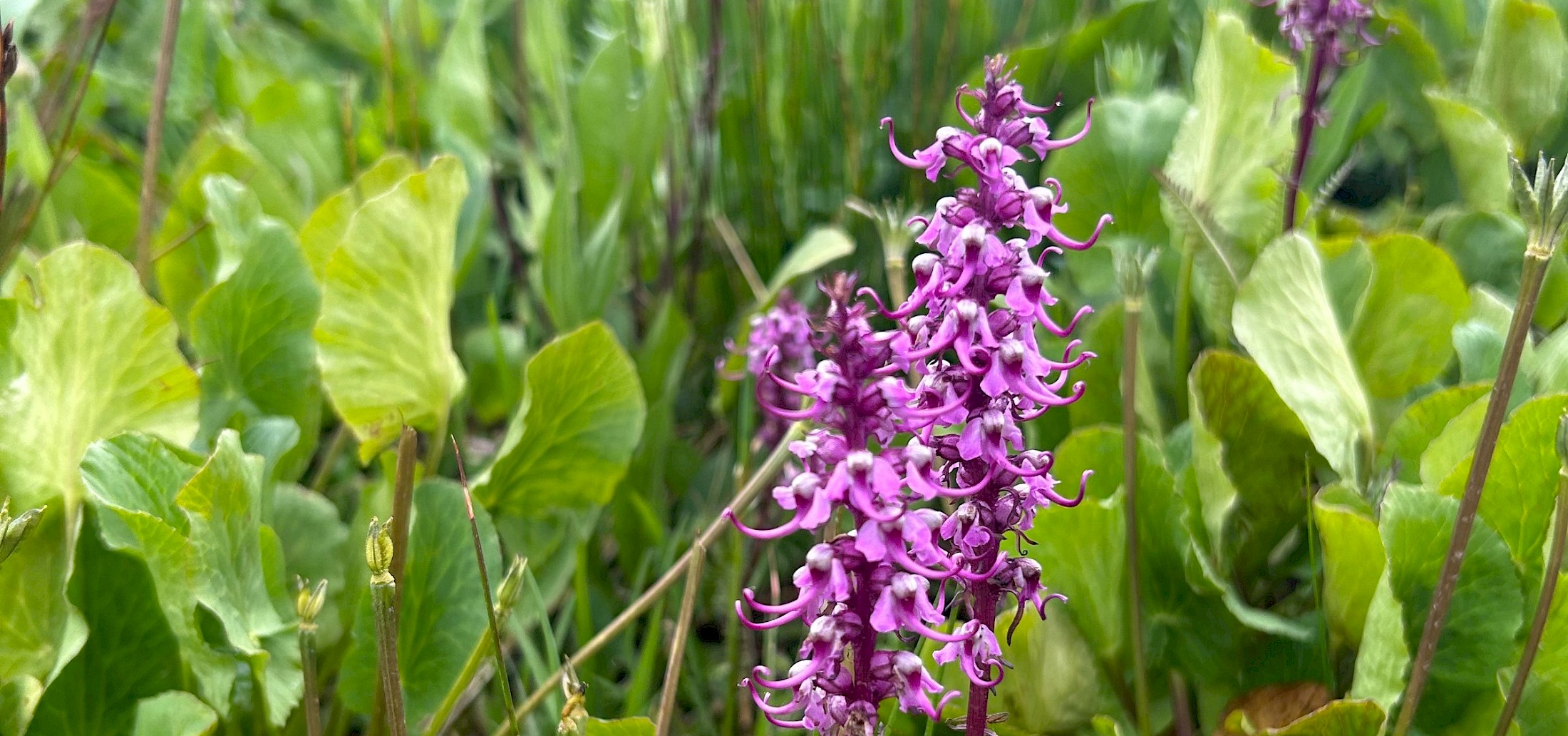
Another standout is Elephant’s Head (Pedicularis, figwort family). As its name suggests, the flower heads look like miniature pink-to-purple elephant trunks stacked atop sturdy stems. Find these blooms in wet, marshy meadows like those along the Wasatch Trail Loop.
Fall (August–September)
Shorter days and cooler nights make way for a new crop of alpine wildflowers, including the emergence of the “quintessential fall flower,” Fireweed (Chamerion, Evening Primrose family). Find these tall pinkish-purple bloomers in disturbed areas, like along the roadsides near Bridal Veil Falls.
Fall ends with Parry’s Gentian (Gentiana parryi, gentian family), whose vase-like blue flowers can bloom into October in alpine and subalpine zones such as those found around Alta Lakes.
Tips for Flower Seekers
- Invest in a local field guide. Two of Henson’s go-to’s are “Wildflowers of the Western Slope” and “Common Wildflowers of the San Juan Mountains,” both by locals Mary Menz and Jim Pisarowicz.
- Stay on the trail. Resist the urge to pick wildflowers.
- Learn the Latin names. “So many plants share the same common name, you really can’t know what is what without knowing the Latin name,” Henson says.
- Start by identifying families. Begin by learning the characteristics of plant families. The more you look, the more you learn.