Old Ways, New Trails: Nordic Skiing
By Evie Carrick
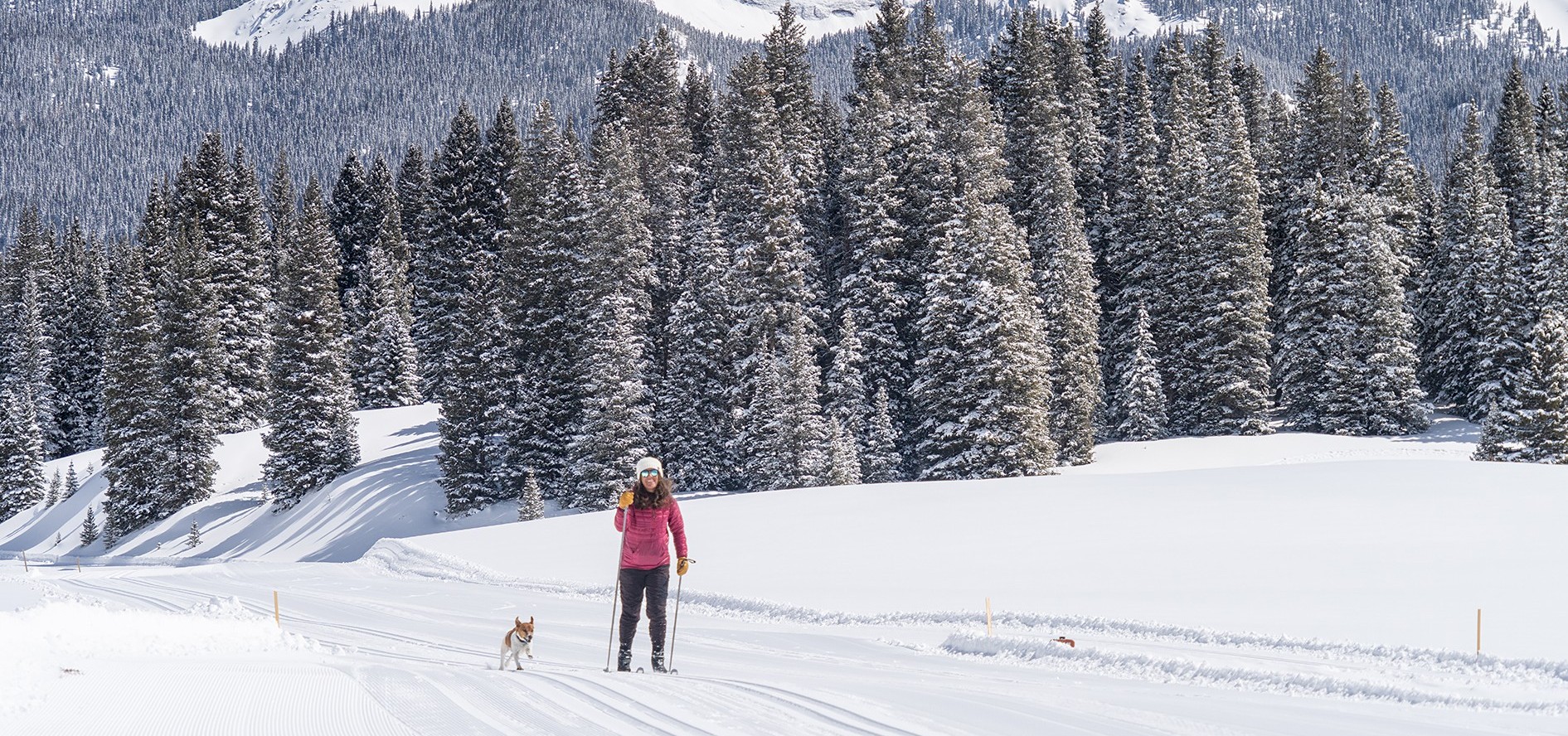
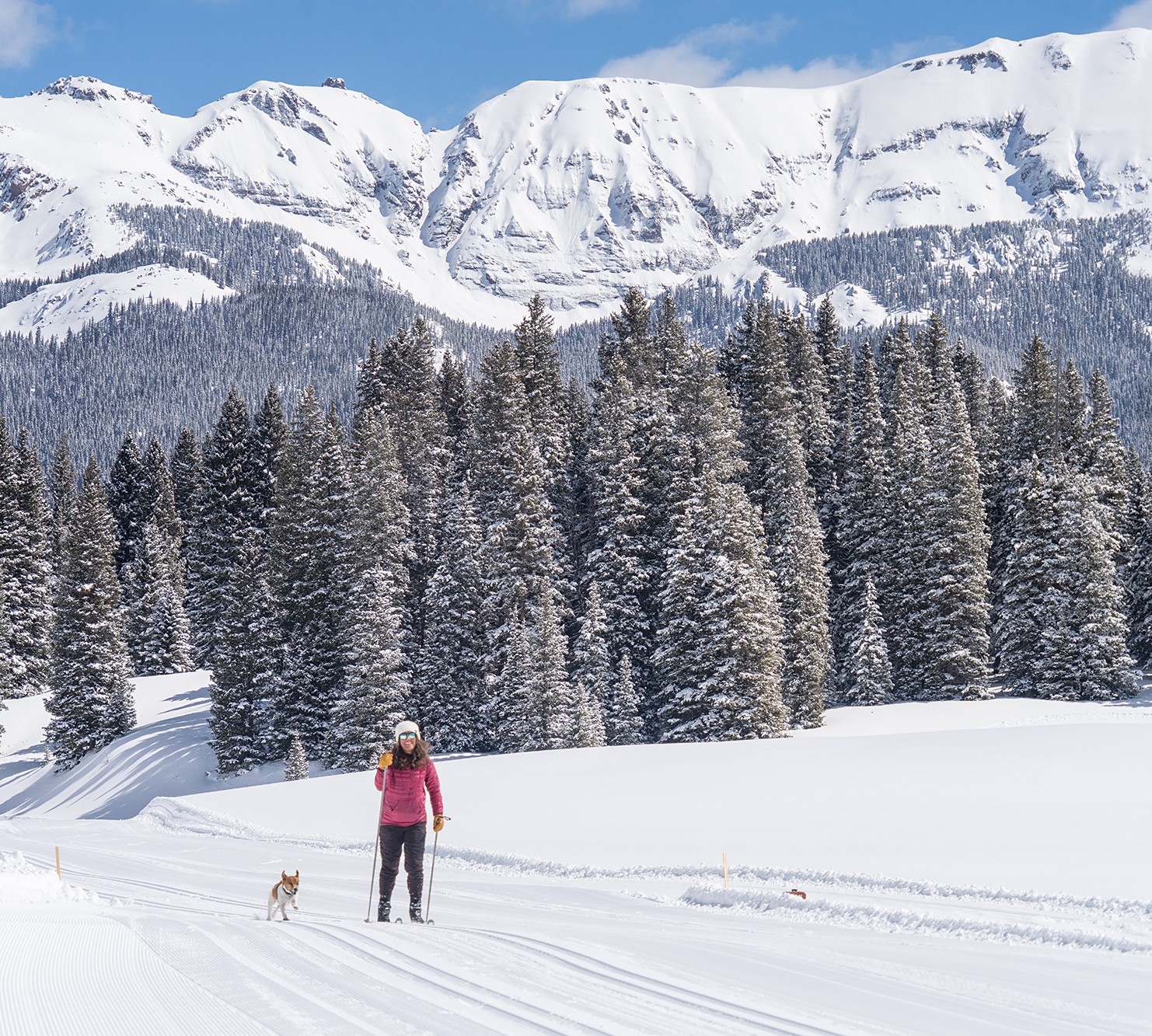
Nordic skiing doesn’t have the glamour of downhill, where chairlifts climb straight into the high peaks and powder days are a religion. Yet speak to someone who has spotted a lynx at Priest Lake or floated down the railroad grade at Trout Lake without seeing another soul, and you’ll glimpse the quiet magic of a sport that’s rooted in nature and solitude. Here, long open ski tracks replace downhill pistes, no pass is required and the gear is light and minimal.
“Even though I alpine ski, backcountry ski, and Nordic ski both disciplines [classic and skate], Nordic is my go-to sport — more specifically classic skiing — which I get excited about every time I’m out there,” says Eric Trommer, board president of the Telluride Nordic Association. “With the light equipment it is easy to access, super fun and fast.”
Often described as the winter equivalent to hiking, Nordic skiing is steady, aerobic and contemplative. The hush of the forest, the sharpness of the mountain air and the chance encounters with wildlife give the sport a timeless appeal. And while it is tranquil, a sudden downhill or a sharp turn delivers an occasional jolt of adrenaline.
From Utility to Recreation
Nordic skiing is perhaps the purest modern echo of skiing’s origins, when skis were less about sport and more about survival. In the late 1870s and 1880s, Scandinavian immigrants arrived in Telluride to work the mines, bringing with them handmade wooden planks paired with a single pole, used for steering, balance and braking. Miners strapped on skis to reach distant claims, while mail carriers relied on them to reach remote homesteads.
“Skis were first introduced in Telluride as a means of transport across the snowy, mountainous terrain at the mines,” says Kiernan Lannon, executive director of the Telluride Historical Museum. “I would imagine that skis were also being used for fun or leisure pretty much from the jump here as well.”
Back then, he explained, “Skiing was skiing and the terrain dictated whether you were going downhill skiing or cross-country [Nordic] skiing.” The distinction between the two disciplines only came later, as equipment evolved and the sport grew more specialized. At the first Winter Olympics in 1924, Nordic events were the only skiing competitions on the program; just 12 years later, in 1936, downhill racing made its Olympic debut.
As downhill skiing gained traction, Nordic began to fade into the background. “It really does seem like most of the attention and historical documentation revolved around downhill skiing,” explains Lannon. “Downhill skiing definitely seemed to draw more attention … the daredevils careening down mountains seemed to be more notable to observers than people using skis for a leisurely trip.”
Yet, the qualities that led to Nordic skiing being overlooked, is precisely what makes it alluring. While downhill skiers wait in lift lines, Nordic skiers slip into the woods, chasing silence, solitude and the rhythm of moving across snow.
The 1970s Revival
Skiing might have arrived in the Telluride box canyon in the 1870s, but it wasn’t until 100 years later, in the mid-1970s, that developed Nordic ski trails took shape.
“Some of the earliest trails here were in and around Adams Ranch which is now Mountain Village,” shares Trommer. “The still-existing barn along Adams Ranch Road was one of the earliest Nordic gathering places.” (The Mountain Village Nordic trail system of today still includes some of these old trail alignments.)
Trommer adds that Double Cabin, the downhill ski run on Lift 10, was once a Nordic ski spot, as was the area where Lift 12 is now. Both areas are now dominated by downhill terrain, but the existing Top-A-Ten Nordic area still offers 10 kilometers of Nordic trail in that area. Meanwhile, the Trout Lake railroad grade has been used by Nordic skiers since the late 1970s and the sport has expanded to Telluride Town Park, the Valley Floor, Priest Lake and down valley along the old railroad grade.
During the early days, Trommer shares that the “trails were not machine groomed but set by skiing prior to use by the public.” There are some accounts of trails being pre-groomed by dragging an old bedspring behind a snowmobile.
Shortly after the early trail systems were created, Nordic ski races arrived, including the Butch Cassidy Ski Chase that started at Adams Ranch and continues to this day at Priest Lake. (This year, the event takes place on Valentine’s Day, February 14, 2026.)
Getting Started
The beauty of Nordic skiing is that it doesn’t take much to get started. No specialty clothing is required — although you will want gloves, pants you can move in and a light jacket — and all the gear can be rented for $40 from the Telluride Nordic Center or from most of the sports shops around town.
Plus, Trommer shares that none of the local venues charge a trail fee and that “it is easy to learn and master the basics. … As a first timer, go to the Telluride Nordic Center in the Town Park. Rentals and lessons are offered. The Town Park trails are perfect for learning how. I would recommend a lesson for anyone just getting started.”
The Telluride Nordic Center offers private and group lessons for both classic and skate skiing.
Classic vs. Skate Skiing
There are two types of Nordic skiing: classic and skate skiing.
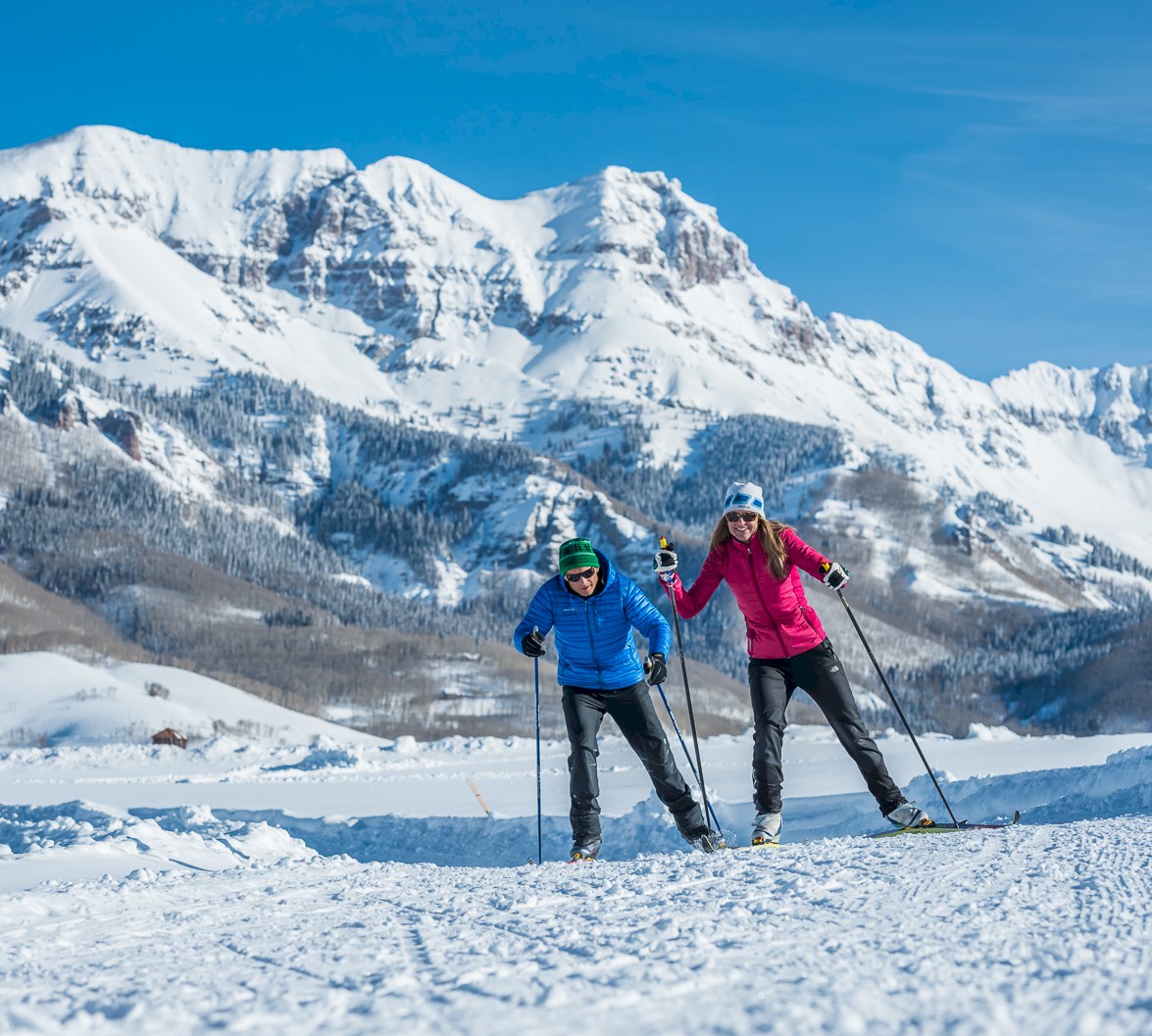
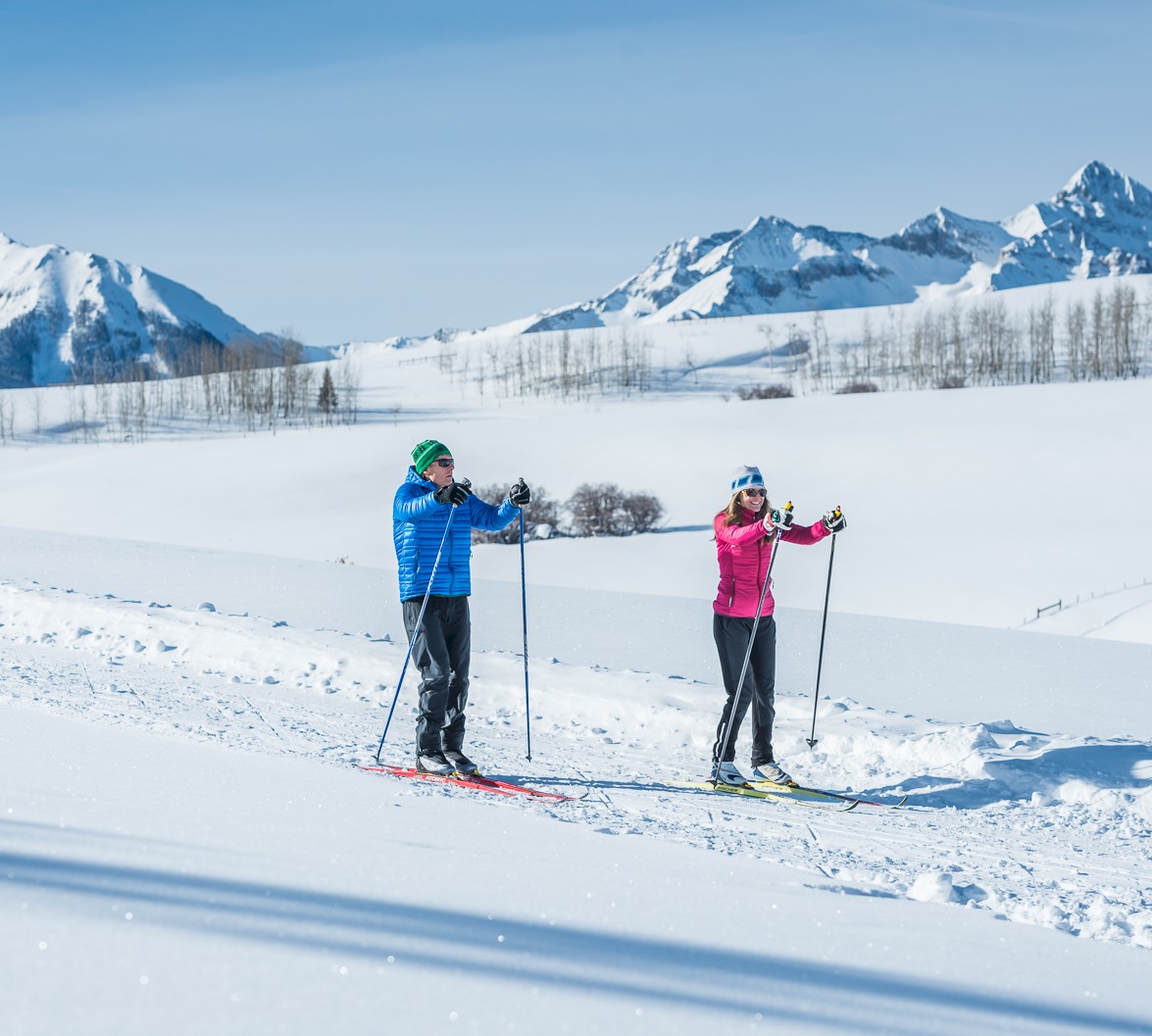
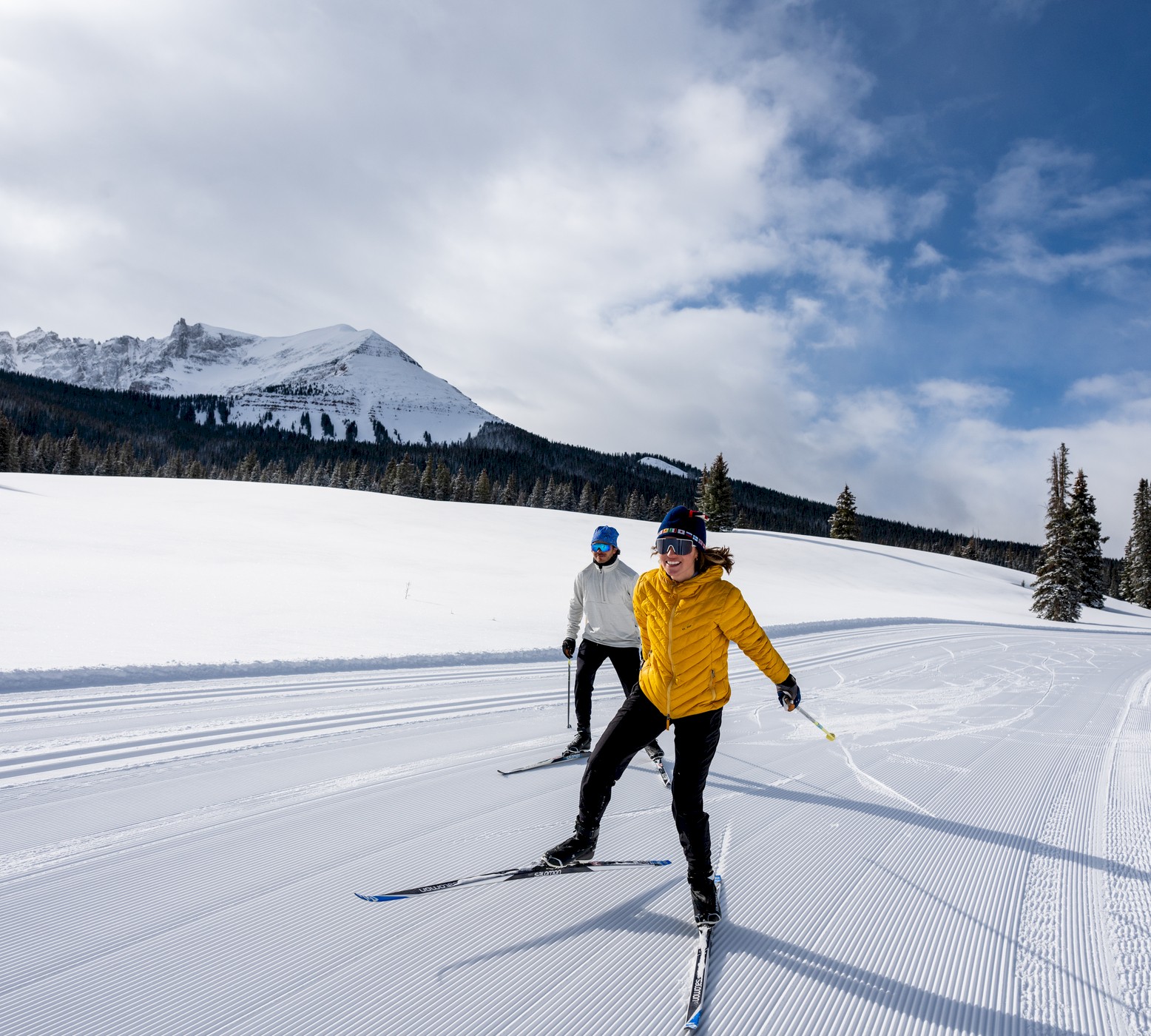
Most people start with classic skiing because it is easier and less aerobic. As Trommer shares, “Classic being the traditional form of skiing with skis parallel therefore appearing like walking or running. Skate skiing is aptly named because you are ‘skating’ from one ski to the other similar to ice skating.”
Five of the seven Telluride ski spots are groomed for both classic and skate skiing — with the classic track set to one side (sometimes both sides) and the skate lane taking up the majority of the trail. Top-A-Ten is the only area trail not groomed for classic skiing, while the M59 River Trail does not have a skate ski lane.
A Return to the Old Ways
In Telluride, skiing has always been more than a sport. From the miners who once strapped on handmade wooden planks to reach remote claims, to the locals who now glide along the Valley Floor at dusk, it remains a way of moving through winter on your own strength.
Nordic skiing may never replicate the enthusiasm that comes with the first chair on a powder day, but that is part of its appeal. It allows you to step into a tradition that predates chairlifts and lift tickets, a reminder that skiing began not as a spectacle, but as a way to cross the mountains.
In that sense, every glide along Adams Ranch Road or loop around Priest Lake is a small act of continuity — a return to the old ways, made new again.
Today’s Nordic Scene
There are seven places to Nordic ski in the Telluride region and none charge a trail fee.
Telluride Town Park
The Nordic trails in Telluride Town Park are perfect for beginners or those who want to take a lesson. The 3 kilometers of trail run around the park and are adjacent to the Telluride Nordic Center, where you will find gear rentals and can book a classic or skate ski lesson.
Best for: beginner skiers, gear or a lesson, easy access
More Info
Valley Floor
The Valley Floor sprawls out from the west end of Telluride, offering 15 kilometers of open, rolling terrain. This is a great place to learn and practice.
Best for: beginner-to-intermediate skiers, easy access
More Info
Mountain Village
To ski the area’s first established Nordic trails, head to Mountain Village. The trail system now includes around 12 kilometers of trail, including the original routes alongside Adams Ranch Road.
Best for: intermediate skiers, dogs, easy access
More Info
Top-A-Ten
At the top of Lift 10, on the Telluride Ski Resort, is 10 kilometers of rolling trails along with a warming teepee, picnic deck and restrooms. To get there, you can either buy a single-use lift ticket ($25) and ride the chairlift or uphill ski from the ski area base.
Best for: intermediate skiers, on-mountain views
More Info
Priest Lake
The Priest Lake trails are 25 minutes south of Telluride by car, but the skiing, which includes interconnected loops over rolling terrain, easily makes up for the drive. As does the fact that the trails are groomed daily.
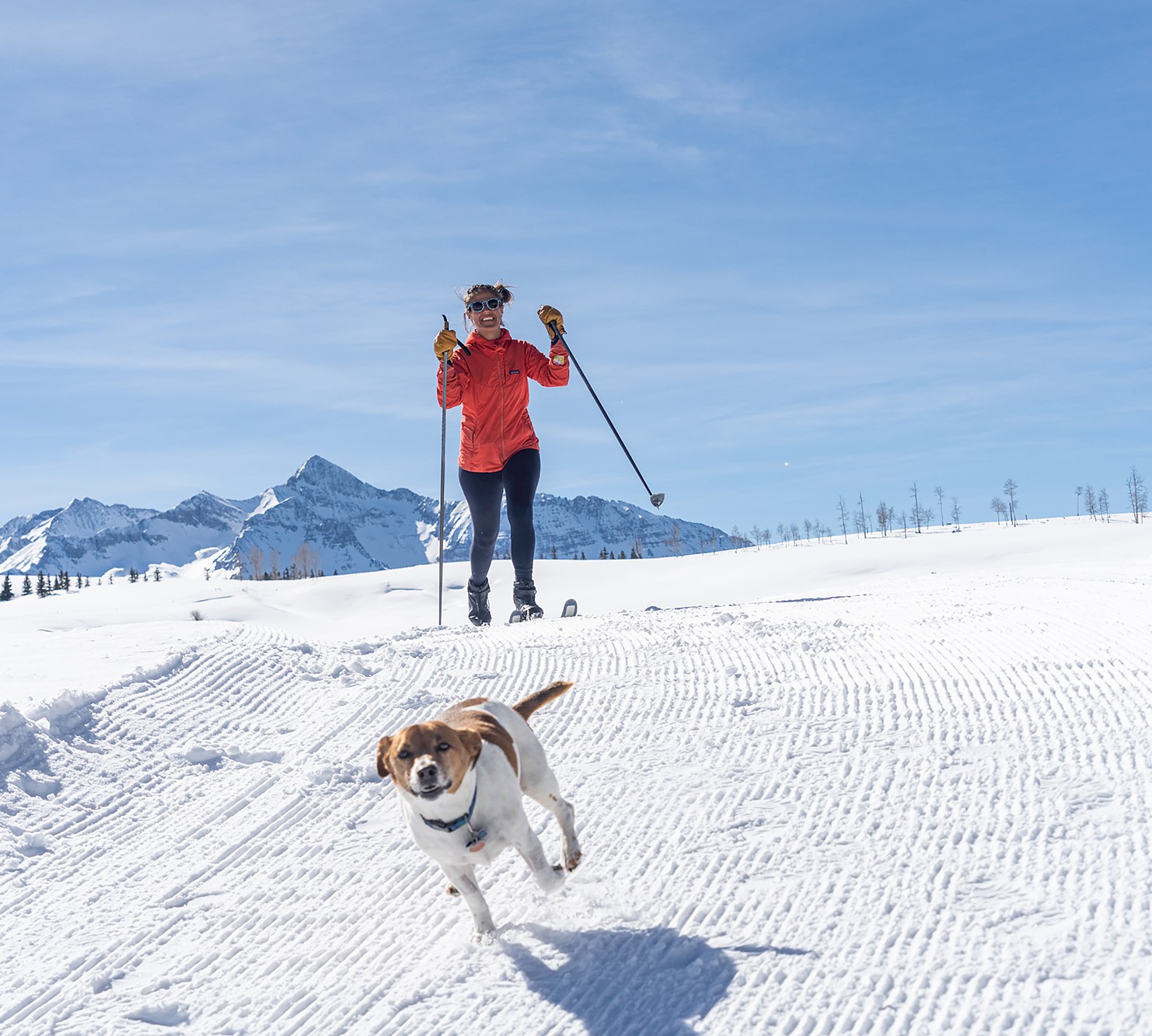
Best for: intermediate and advance skiers, good snow, big views, dogs
More Info
Trout Lake
Just beyond Priest Lake is Trout Lake, and while the ski spot is a full 30 minutes from downtown Telluride, the Trout Lake railroad grade is always the first and last skiable trail due to its consistent and long-lasting snowfall. Like Priest, Trout Lake is also groomed daily.
Best for: all levels of skiers, good snow, dogs, views
More Info
M59 River Trail
The lesser-visited River Trail follows the old railroad grade along the south side of Highway 145 between Silverpick Road and the highway maintenance barn at Deep Creek. It is the only area trail without a skate skiing track and is groomed for classic skiers only.
Best for: beginners, river views, those looking for quiet