Fields, Farms & Telluride Tables: Local producers committed to regenerative farming and local sourcing
By Jesse James McTigue
Farm-to-table movements thrive where growing seasons are long and logistics are easy — conditions rarely found in Telluride, with its long winters and rugged terrain. Yet beyond the box canyon, on the surrounding mesas and valleys, farmers, ranchers, and artisan bakers remain committed to producing organic local food and getting it onto Telluride tables.
Ossola Family Farms
Montrose & Telluride
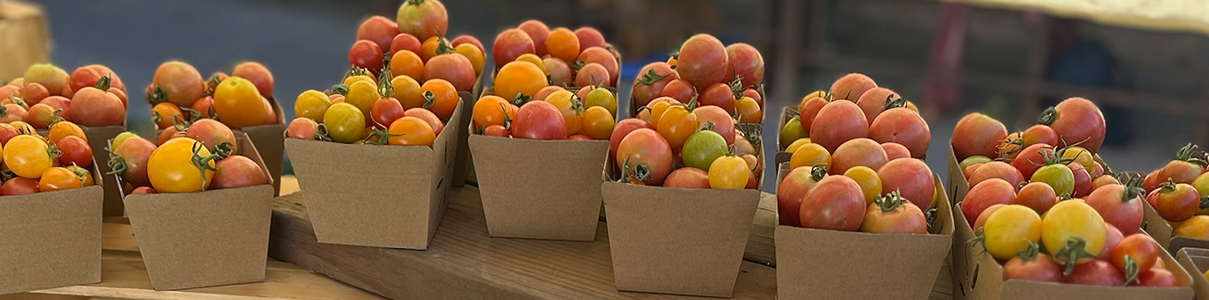
Megan Ossola, owner of the legendary main street restaurant The Butcher & The Baker, has long been committed to sourcing organic food from local regenerative farms. In 2018, she deepened that commitment by purchasing 13 acres in Montrose with her husband. It was land that, she says, “came with a historic 1800s farmhouse, a century-old heirloom orchard, and five tons of junk.”
After three years of cleanup and cultivation, and six more restoring the house and property, Ossola Family Farms is now in its fifth year of production, growing roughly 90 percent of the food served at The Butcher & The Baker during the summer months.
Through both the farm and her restaurant, Ossola is committed to a full-circle “farm-to-table, table-to-farm” ethos. She even runs a community-wide composting program that turns local food waste into fertilizer for the farm.
“I wanted to prove it was possible to close the loop with the composting program and to grow locally with a farm that is 60 miles away,” Ossola says.
Ossola readily admits that owning a farm adds stress, but she’s also quick to list the rewards: freezing and preserving vegetables for winter dishes; making her own chili crunch, pickles, and jam; having full control of the menu; and most importantly, serving flavorful, nutritious food.
“We grow everything from a seed and put it on a plate,” she says.
Where to find it: Ossola Family Farms products are featured heavily in dishes at The Butcher & The Baker. In the summer, the farm has a booth at the Telluride Farmers' Market on Oak Street (Fridays).
Blue Grouse Bread
Norwood
Hannah Rossman grew up in Vermont and says farm-to-table was “part of the culture,” with “good artisan bread in every town and grocery store.” When she moved to the San Juans in 2013, she found that homemade bread was missing from the local food scene.
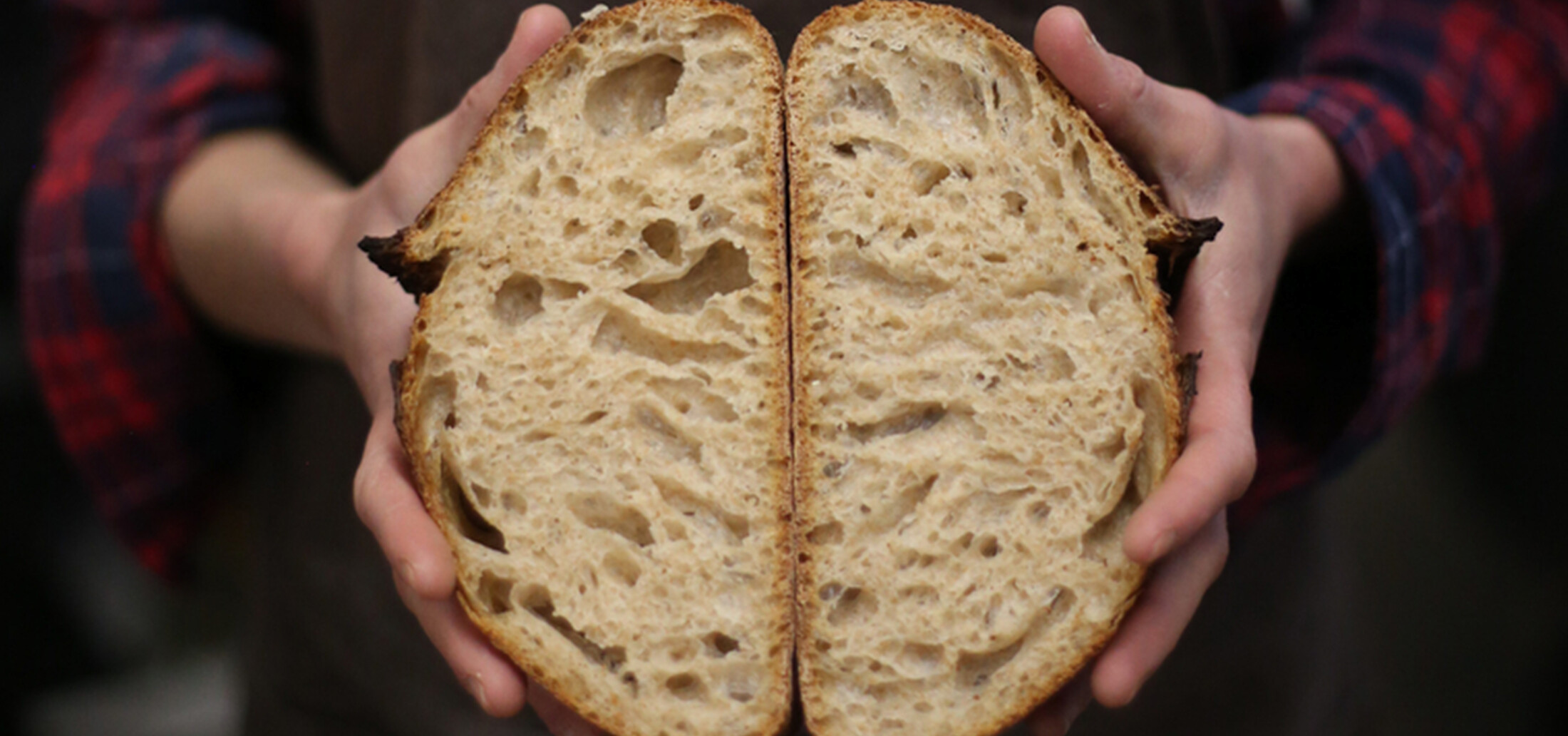
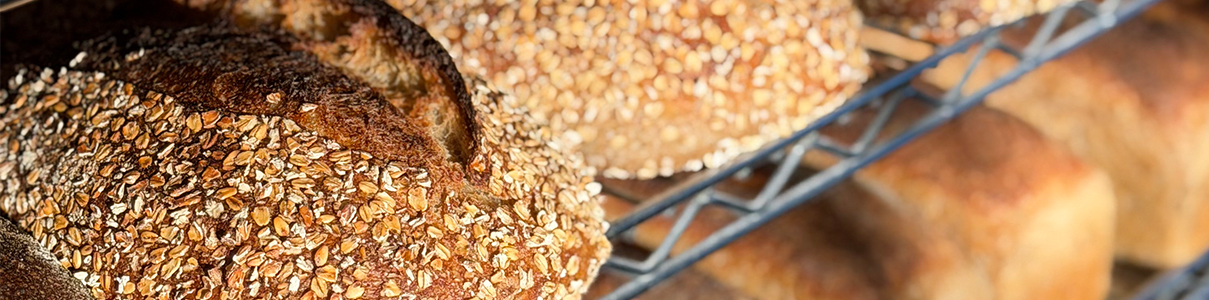
In 2016, Rossman and her cousin, Ben Rossman, set out to fill that need, starting what has become a local sensation. Blue Grouse Bread is a sourdough artisan bread known for its perfect crust, airy interior, and rich flavor.
Hannah believes there are two things that make Blue Grouse Bread distinct: the ingredients and the fermentation process. They buy whole wheat flour directly from Colorado farmers and mill it themselves using a stone burr mill Hannah bought down the road from where she grew up.
“We mill whole wheat flour so we get 100 percent of the grain’s nutrition,” Hannah says, “and the result is a nutritious product with amazing flavor.”
When explaining the bold flavor, she points to the fermentation process, noting that flavor increases with time. “We allow for a long fermentation process,” she says. “We take three days from start to finish.”
Blue Grouse Bread, led by Hannah and her new business partner, Colby Brown, turns 10 this summer. The Norwood-based company currently employs eight people. “It’s important to us that we support the local economy and we hope it’s important to those who buy Blue Grouse,” Hannah says. “We’re proud that we do everything from start to finish and we do it locally.”
Where to find it: Blue Grouse bread is served in many local restaurants and can be purchased at Clark’s Market in Telluride, The Village Market in Mountain Village, and Clark’s Market in Norwood.
Hank’s Hens at Indian Ridge Farm
Norwood
Henri “Hank” Spaan got his first taste of agriculture during summer visits to his family’s cattle ranch in Nebraska. In high school, while at boarding school in Carbondale, Colorado, he completed a three-week internship at Indian Ridge Farm in Norwood and his interest in farming deepened, leading him to study at the University of Vermont College of Agriculture and Life Sciences.
Since graduating, Spaan has worked on a large-scale pastured poultry farm near Burlington, Vermont that used regenerative vegetable operations, and has completed Quivira Coalition’s New Agrarian Program apprenticeship. Finally, six years after his internship at Indian Ridge Farm, he returned to the farm to lead their pastured poultry program.
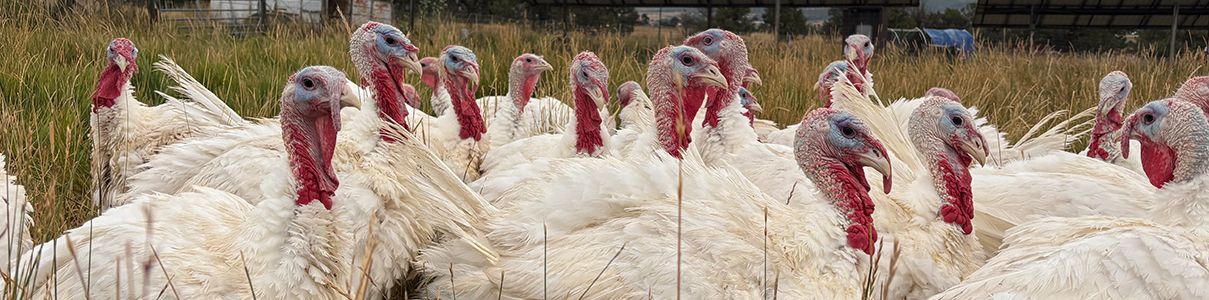
Spaan currently leases two acres at Indian Ridge Farm for his chicken and turkey operation. Last summer, he processed 1,000 birds, producing 4,300 pounds of chicken and 45 Thanksgiving turkeys.
“I saw the benefit of what chickens can do to soil and what you can do with really small acreage,” Spaan says. “Chickens don’t need a lot.”
Spaan raises his chickens from just a few days old, caring for them in the brooder for the first four weeks before they move to pasture. “It’s a different product than conventional chicken that sits inside and eats grains and gets fat,” Spaan says. “Their pastureland has incredible soil; what they eat and how they’re raised changes the flavor. It’s a different product entirely.”
Spaan is also invested in regenerative farming, noting that the chickens are good foragers and their manure puts nitrogen back into the soil.
“The region has an incredible local food scene if you know where to look,” Spaan says. “I’m happy to be a part of it and feed the local community.”
Where to find it: Hank’s Hens takes online orders and delivers chicken to Telluride, and also sells meat at the Norwood Farm & Craft Market (Saturdays) and the Ridgway Farmers Market (Fridays). At the time of publication, Spaan was working to secure a booth at the Market on the Plaza (Wednesdays) in Mountain Village.